Sheepshead don't strike. They steal.
A sheepshead noses up to your bait, crunches the shell with a mouthful of teeth that look uncomfortably human, and backs away before most anglers feel a thing. Reel up and the hook is clean. That's why anglers call them bait thieves, and it's why a sheepshead setup comes down to one thing: feeling the bite in time to do something about it.
This guide covers the sheepshead rigs that work around structure, the best bait for sheepshead, where to find them, and which FishStix rod fits the water you fish.
Why Sheepshead Are So Hard to Hook
Sheepshead feed on barnacles, crabs, oysters and mussels, so they're built to crush and pick rather than inhale. The bite usually shows up as a light tap, a faint crunch or a slight weight on the line. By the time you feel a solid pull, the bait is often gone.
They also live tight to structure: jetty rocks, dock pilings, bridge supports and oyster reefs. Once hooked, a good sheepshead turns broadside and heads back into the rocks. You need a sensitive tip to feel the bite and enough backbone to pull the fish away from cover in the first few seconds.
🎣 Set Early: The old saying among jetty regulars is to set the hook just before you feel the bite. In practice, keep a tight line, and when you feel the faintest tap or crunch, lift sharply. If you wait for a second tap, you're usually feeding the fish.
Sheepshead Rigs That Work
You don't need a tackle box full of terminal tackle. Three sheepshead rigs cover almost every structure on the coast.
The Knocker Rig
The knocker rig is the go-to sheepshead rig for a reason. Slide an egg sinker (1/4 to 1 oz depending on current) directly onto a short fluorocarbon leader so it rests right against the eye of the hook. With no swivel between the weight and the hook, you feel every touch, and the bait stays pinned close to the structure where sheepshead feed. It also snags less in the rocks than a long Carolina rig.
The Jighead Rig
A 1/8 to 1/2 oz jighead tipped with a piece of shrimp or a fiddler crab is the simplest way to fish pilings and jetty edges. Drop it straight down along the structure, let it touch bottom, and lift it a few inches. Many anglers call this a sheepshead jig, and it works especially well when you're moving from piling to piling.
The Dropper Rig
For vertical fishing off a dock or bridge, tie a dropper loop 12 to 18 inches above a bank sinker and put a short hook leader on the loop. The sinker holds bottom, the bait sits just above it in front of the barnacles, and you can fish a deep piling without the rig rolling into a snag.
Best Bait for Sheepshead
Fiddler crabs are the top bait in most places. Hook them through the back corner of the shell and they stay on the hook while a sheepshead picks at them.
Live or fresh dead shrimp work everywhere and are easy to find. Use small pieces rather than a whole shrimp, so the fish has to take the hook to get the bait.
Barnacles, mussels and oysters are what sheepshead are already eating on the structure. If the bite is slow, scrape barnacles off a piling with a flat shovel or a long-handled scraper to chum the water, then fish a fiddler or a piece of shrimp in the debris.
Use small, strong hooks in the #1 to 1/0 range. A sheepshead's mouth is small and hard, and a big hook makes it easy for the fish to pick around the point.
Where and When to Find Sheepshead
Look for hard structure covered in growth: jetties, rock groins, docks, bridge pilings, bulkheads and oyster reefs. On the Texas coast, the Galveston, Freeport, Port O'Connor and Port Aransas jetties are classic sheepshead water.
Sheepshead fishing peaks in late winter and early spring, when the fish gather around jetties and passes to spawn. In Texas, that usually means February and March, which makes sheepshead one of the best options on the coast when trout and redfish fishing slows down in cold water.
In Texas, the sheepshead limit is 5 per day with a 15-inch minimum length. Other states set their own limits, so check your state wildlife agency before you keep fish.
🎣 Fish the Tide Change: Sheepshead feed hardest when current is moderate. Around slack tide, the jetty can go quiet. As the tide starts moving again, work the down-current side of the rocks, where crabs and broken shell wash out of the structure.
The Best Rod for Sheepshead: FishStix Models Mapped to the Structure
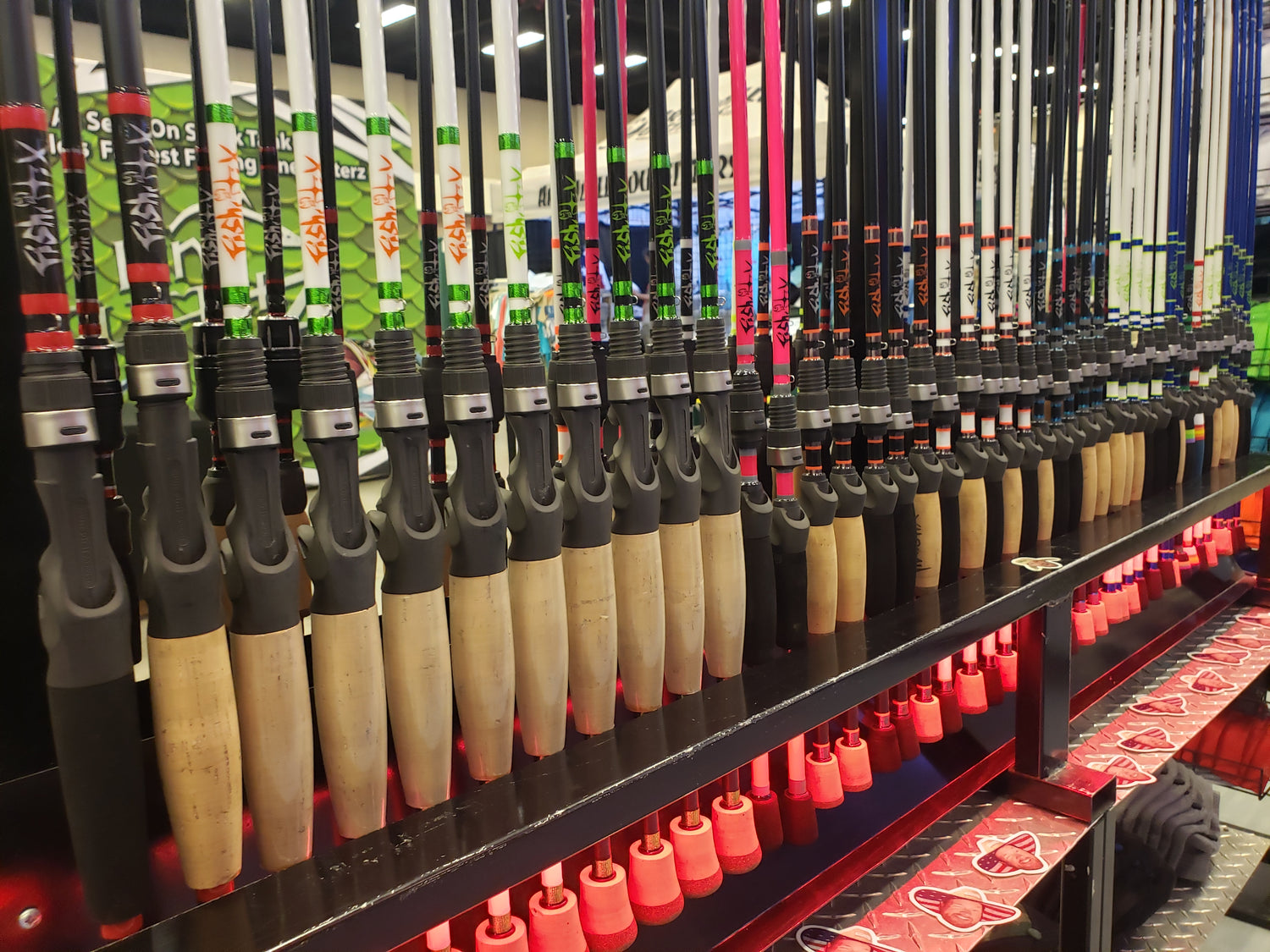
A sheepshead rod needs a fast, sensitive tip to feel light bites and a blank with enough backbone to pull fish off the rocks. Here's how the FishStix lineup matches up.
Best All-Around Sheepshead Rod: The President / Baitcast
The Titanium Series President baitcast rod is 6'9" with medium power and a fast action, rated for 3/8 to 1 oz. That fast tip telegraphs the tap of a sheepshead picking at a fiddler, and the shorter length gives you control when you're fishing straight down along pilings or the edge of a jetty.
Best for Jetties and Heavy Current: Rod Father / Spinning
When you're casting a knocker rig into current from the rocks, reach and power matter. The Titanium Series Rod Father spinning rod is 7'6", medium-heavy and fast, rated 3/8 to 1 1/4 oz. The extra length keeps your line off the rocks, and the medium-heavy blank turns a big sheepshead before it gets back into the jetty.
Best for Light Jigs Around Docks: Middle Man / Baitcast
In calm water around docks and bulkheads, a 1/4 oz jighead with shrimp is often all you need. The Titanium Series Middle Man baitcast rod is the lightest-rated rod in the lineup, 6'9" with medium-light power and a 1/4 to 5/8 oz rating, so a light jig loads the blank and you feel every touch.
Best Value Sheepshead Rod: The Hitman / Spinning
The Guide Series Hitman spinning rod is 7 feet, medium power and moderate-fast, rated 3/8 to 1 oz, at the most accessible price in the lineup. It handles knocker rigs and jigheads well and makes a strong first rod for anglers new to structure fishing.
Every FishStix rod is one of our custom rods for saltwater, designed by Hunter Welch from time on the Texas coast and finished with titanium guides on the Titanium Series. Jetty fishing is hard on gear, with salt spray, rocks and barnacles all day, and those guides hold up to it season after season.
Reel, Line and Leader for Sheepshead
Pair your rod with a 2500 to 3000 size spinning reel or a 150 size baitcaster. Spool 15 to 20 lb braid for sensitivity, since braid's lack of stretch is what lets you feel a sheepshead's bite. Add 12 to 18 inches of 20 to 25 lb fluorocarbon leader to stand up to barnacles and rock. Keep the leader short. A long leader gives the fish slack to pick your bait without you feeling it.
Stop Feeding the Convicts
A sheepshead setup is simple once the pieces fit: a knocker rig or jighead, a fiddler crab or a small piece of shrimp, a short fluorocarbon leader, and a fast-tip rod that tells you the moment a fish touches the bait. If you already have the right flounder gear, our guide to flounder rigs, bait and the best rod for flounder shows how much of it carries over. Not sure which rod fits your jetty? Contact the FishStix team and we'll help you match a setup to how you fish.
Frequently Asked Questions
What is the best rig for sheepshead?
The best rig for sheepshead around jetties and pilings is a knocker rig: an egg sinker sitting directly on top of a #1 to 1/0 hook on a short 20 lb fluorocarbon leader. Because the weight rests against the hook eye, you feel light bites instantly and the bait stays tight to the structure where sheepshead feed.
Can I use my redfish or flounder rod for sheepshead?
Often, yes. A 7-foot medium rod with a fast or moderate-fast tip will catch sheepshead. Where a dedicated setup helps is sensitivity and leverage: a fast-action rod like the President picks up bites a softer rod misses, and a medium-heavy rod like the Rod Father pulls big fish out of jetty rocks before they cut you off.