Most fish tell you they're hooked. A tarpon tells everyone within a quarter mile. It eats, turns and comes out of the water six feet high with its gills rattling, and the next two seconds decide whether you're fighting a fish or reeling in slack.
That's why the best tarpon rod isn't just a heavier version of your redfish rod. It has to cast big flies or baits into the wind, survive the jumps, and give you enough lifting power to finish the fight fast so the fish swims away healthy. This guide covers the fly and conventional setups for both juvenile and migratory tarpon, and where each FishStix rod fits.
What Makes Tarpon So Hard on Tackle
Tarpon combine three problems that rarely show up in the same fish. They're big, with migratory adults commonly running 60 to 150 pounds. They jump, repeatedly, which puts sudden slack and sudden shock on your line. And their mouths are mostly bone, so a hook that would bury in a redfish can skate across a tarpon's jaw and pull free.
Add long first runs, abrasive mouths that wear through light leader, and fights that should end quickly for the fish's sake, and you get a species that exposes every weak link in a setup.
Know Which Tarpon You're Fishing For
Picking a tarpon rod starts with an honest answer to one question: are you targeting juveniles or adults? The gear is different enough that one rod rarely does both well.
Juvenile Tarpon (5 to 30 Pounds)
Juvenile or "baby" tarpon live in backcountry creeks, canals, mangrove shorelines and marsh drains. In South Florida you can find them most of the year. On the Texas coast they show up in summer and fall around marshes, bayous and jetties. They roll on calm mornings, eat small baitfish and shrimp, and give you all the jumping of a big tarpon on tackle you can cast all day.
Migratory Adults (60 to 150+ Pounds)
Adult tarpon move along the coast in schools, laid up on beaches, rolling in passes and stacking under bait. In Florida the classic season runs from late spring into summer. In Texas, the best adult action usually comes late summer into fall, near jetties and passes from Galveston to Port Aransas. These are fish that require purpose-built big-game tackle.
The Best Fly Rod for Tarpon
Tarpon on fly is one of the most sought-after shots in saltwater fishing, and it's where rod choice matters most.
The 11wt: Built for Adult Tarpon
An 11 or 12 weight is the standard tool for migratory tarpon. The extra line mass carries big, wind-resistant flies, and the stout butt section gives you the leverage to lift and turn a fish that outweighs most anglers' coolers. The FlyStix 9ft 11wt saltwater fly rod is built for exactly this: a 9-foot, 4-piece blank with titanium guides that loads fast in coastal wind and holds up to a season in the salt.
The 8wt: The Right Call for Juveniles
For baby tarpon in creeks and canals, an 11wt is overkill. An 8 weight casts smaller flies with more accuracy, fishes tight mangrove edges better, and still has the backbone for a 20-pound fish. The FlyStix 9ft 8wt saltwater fly rod doubles as your redfish and snook rod the rest of the year. If you're torn between the two, our guide to choosing between an 8wt and an 11wt fly rod walks through the decision.
Line, Leader and Flies
Most tarpon anglers run a floating or intermediate tarpon-specific line. The leader is where tarpon fishing gets specialized: a class tippet section ending in a short bite tippet of heavy fluorocarbon, typically 30 to 40 pound for juveniles and 60 to 80 pound for adults. That bite tippet is what keeps a tarpon's rough mouth from sawing through your leader during a long fight.
For flies, think baitfish and crabs: toads, bunny strips, and EP-style baitfish patterns on 1/0 to 4/0 hooks for adults, with smaller versions for juveniles. Sharpen every hook before you fish it. A tarpon's jaw punishes anything less than needle sharp.
🎣 Bow to the King: When a hooked tarpon jumps, push your rod tip toward the fish. That brief slack keeps the fish from landing on a tight line and snapping the leader or throwing the hook. As soon as it hits the water, come tight again and get back to work.
Spin and Baitcast Setups for Juvenile Tarpon
Conventional tackle is the easiest way into tarpon, especially for juveniles. Look for a 7-foot to 7'6" rod with medium-heavy power and a fast action. The fast tip helps you work swimbaits and twitchbaits, and the medium-heavy backbone lets you lean on a fish and keep fights short.
The Drum Stix baitcast rod is the heaviest-duty rod in the FishStix lineup: 7 feet, medium-heavy power, fast action and a lure range up to 1 3/4 oz, which covers heavier swimbaits and live baits around jetties. On spinning gear, the Titanium Series Rod Father spinning rod gives you 7'6" of reach and a medium-heavy blank for longer casts to rolling fish.
Both rods are matched to juvenile tarpon and the smaller end of the run. Adult tarpon over 60 pounds call for heavier big-game rods, larger reels and 50 to 80 pound braid, and pushing an inshore rod past its rating just means a longer, harder fight for the fish.
Line, Leader and Hooks
For juveniles, spool 20 to 30 lb braid and add 3 feet of 30 to 40 lb fluorocarbon leader. On artificials, a 4 to 5 inch paddle tail or a suspending twitchbait covers most situations. With live bait such as pilchards, finger mullet or shrimp, use a non-offset circle hook. With a circle hook, don't swing hard. Just reel tight and let the hook find the corner of the jaw.
Where and When to Find Tarpon
Florida is the center of tarpon fishing in the U.S., from the Keys and Everglades backcountry to the passes of the Gulf Coast. If you fish the Sunshine State, our guide to inshore fishing rods for Florida covers the setups we'd bring to each region. On the Texas coast, tarpon show up around Galveston, Matagorda and Port Aransas, with jetties and passes holding fish as they move through.
Watch for rolling fish on calm mornings and evenings. Tarpon can gulp air at the surface, so a slick, glassy morning often gives away a school you would never see otherwise.
Regulations matter with this species. Florida treats tarpon as catch and release only, and fish over 40 inches must stay in the water. Texas allows one tarpon per day with an 85-inch minimum length, which makes nearly every Texas tarpon a release fish too. Check FWC or TPWD rules before you go, since they can change.
🎣 Shorter Fights, Better Releases: A tarpon fought to total exhaustion is easy prey for sharks after release. Use the strongest tackle you can fish comfortably, pull low and to the side to keep the fish off balance, and keep the fish in the water while you remove the hook.
Rods Built for the Salt from the Start
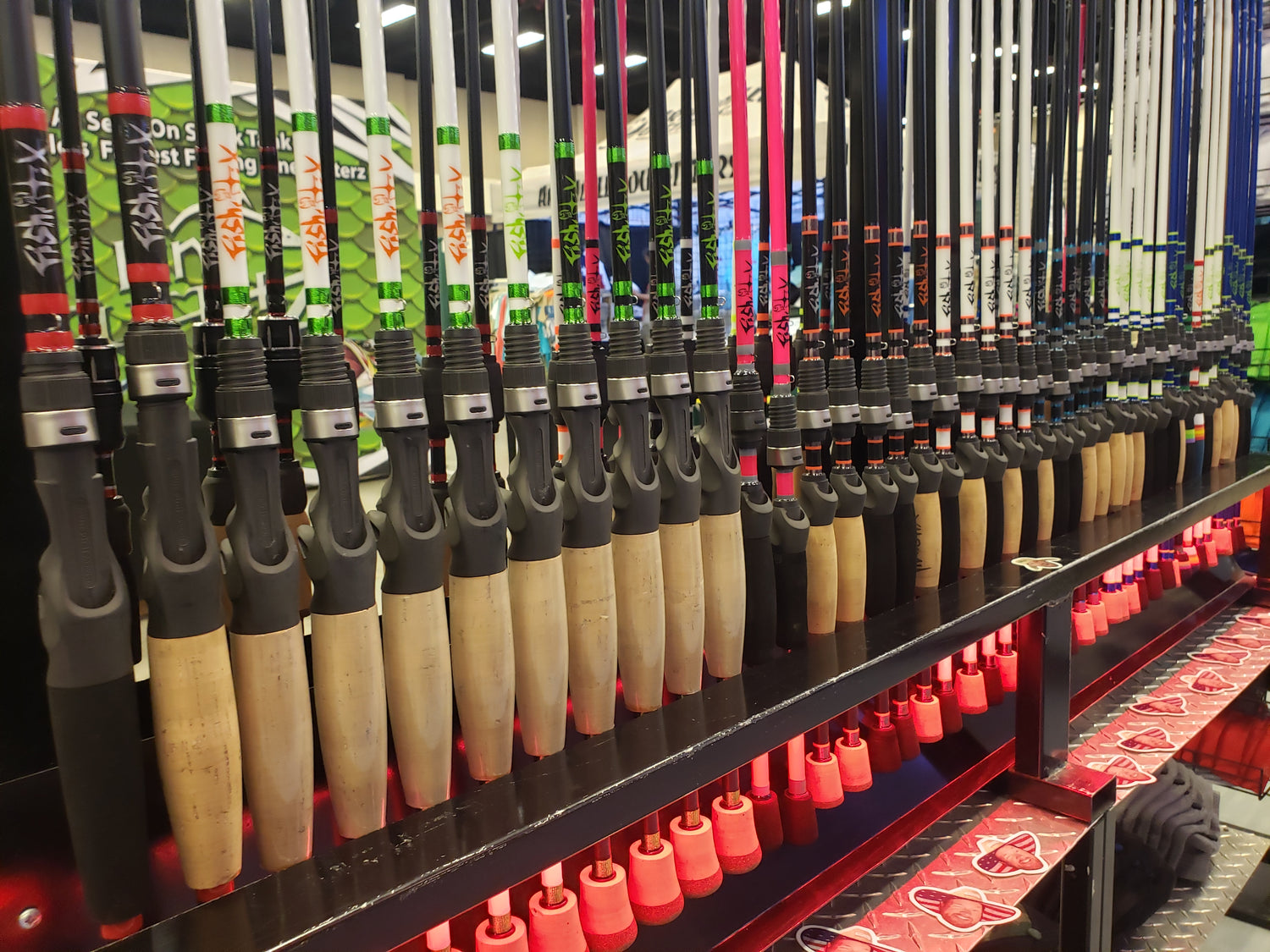
FishStix has built its lineup of custom saltwater fishing rods around the inshore coast, not around freshwater blanks adapted for salt. Founder Hunter Welch designs every rod from real time on the water, and both FlyStix models and the Titanium Series carry titanium guides that resist the corrosion that ruins coated hardware in a season or two. For tarpon, that matters: the fish that tests your rod hardest usually shows up on the day your gear has seen the most salt.
Hook, Jump, Release
The best tarpon rod is the one matched to the fish in front of you. For adults on fly, that's an 11wt with a heavy bite tippet. For juveniles, it's an 8wt fly rod or a medium-heavy, fast-action rod like the Drum Stix. Not sure which fits your water? Contact the FishStix team and we'll help you match a rod to how you fish.
Frequently Asked Questions
What weight fly rod is best for tarpon?
For migratory adult tarpon, an 11 or 12 weight fly rod is the standard, because it casts large flies into wind and has the lifting power to shorten the fight. For juvenile tarpon under about 30 pounds, an 8 or 9 weight is easier to cast accurately in creeks and canals and still has enough backbone to land them.
Can I catch tarpon on a redfish rod?
Juvenile tarpon, yes, if the rod is medium-heavy with a fast action and you use a 30 to 40 lb leader. A typical medium-power redfish rod will land small tarpon but makes for long fights on anything bigger. If you're still dialing in your redfish gear, our breakdown of the best rod for redfish and speckled trout is a good place to start.