
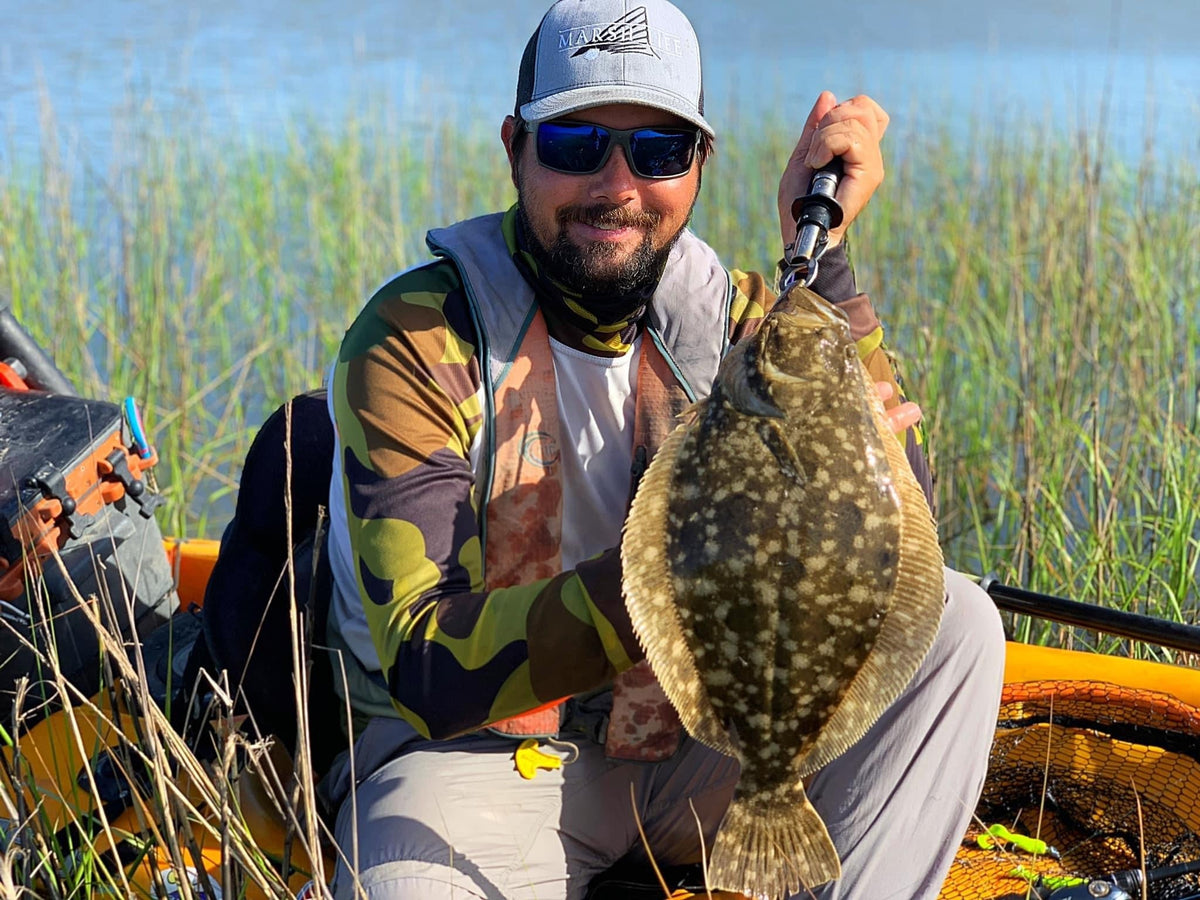
Flounder don't hit. They pin.
That's the whole problem. A redfish tells you it's hooked up. A trout at least taps. A flounder grabs your bait, holds it, and waits to see what you do. Set the hook on that first thump and you pull the bait out of a closed mouth. Wait too long and the fish spits it. Most missed flounder aren't a bait problem or a location problem. They're a setup problem.
This guide covers the flounder rigs that actually produce, the best bait for flounder in fall, how to fish for flounder from shore, and which FishStix rod matches how you fish. If you already read about when and where the run happens in our Texas flounder run guide, this is the gear half of that conversation.
Why Flounder Need a Different Setup Than Redfish or Trout
Flounder are ambush feeders. They lie flat in sand or mud, usually on a current edge, and let the tide bring food to them. The bite comes as a dull thump followed by dead weight, like you snagged a wet towel. The fish is sitting there with your bait crossways in its mouth.
That changes two things about your setup. First, the rod tip needs to be soft enough that the flounder feels no resistance while it's holding the bait. Second, the rod needs enough backbone to drive a hook through a mouth full of teeth once you finally lean into it.
A stiff, extra-fast trout rod fails the first test. A noodle rod fails the second. Flounder live in the moderate-fast middle, and that's where every recommendation below lands.
🎣 The Two-Count Rule: When you feel the thump, drop your rod tip toward the fish and count to two before you set. That slack tells the flounder nothing's wrong, and it turns the bait so the hook is pointed into the jaw instead of out of it. Hunter's shop rule is simple: if you're missing flounder, you're setting early, not late.
Flounder Rigs That Actually Work
Skip the tackle-aisle overload. Three flounder rigs cover almost every situation on the Texas coast.
The Carolina Rig (Fish-Finder Rig)
This is the workhorse for live bait. Slide an egg sinker (1/4 to 1 oz depending on current) onto your main line, tie on a swivel, then add 12 to 18 inches of 20 lb fluorocarbon leader and a 1/0 to 3/0 Kahle or wide-gap hook. The weight sits on the bottom, the bait swims a foot above it, and the flounder can pick it up without feeling the sinker.
Fish it slow. Drag, pause, drag. Most bites come on the pause.
The Jighead Rig (Your Flounder Jig)
A 1/4 to 3/8 oz jighead with a 3 to 4 inch paddle tail or Gulp Swimming Mullet is the most efficient flounder jig there is. It covers water, it stays in contact with the bottom, and it lets you feel the difference between shell, mud, and a fish. Bump it along the bottom in short hops and let it sit for a beat between each one.
Bright heads (chartreuse, pink, white) help in stained fall water. Match the jighead weight to the current, not the depth. If you can't feel bottom, go heavier.
The Tandem Rig
Two jigheads spaced 12 to 18 inches apart on a dropper loop. It doubles your odds on a drain where flounder stack up, and it lets you run two colors until the fish tell you which one they want. It's also the rig you'll see on a lot of stringers at the Flattie Daddy weigh-in.
Best Bait for Flounder: Live vs. Gulp
Ask ten Galveston flounder anglers and you'll get a clean split.
Live bait: Finger mullet (3 to 4 inches) is the gold standard during the fall run. Mud minnows are a close second and stay alive in the bucket longer. Live shrimp works, but everything else in the bay eats it first. Hook live bait through the lips on a Carolina rig so it swims naturally.
Gulp bait for flounder: The Berkley Gulp Swimming Mullet in 3 or 4 inch is the closest thing to a cheat code. White, chartreuse, and new penny are the colors that stay in the boat. The scent trail does the work a live bait's movement normally does, and you're not running to the bait stand at 5 a.m. Rig it on a jighead and fish it like a live minnow: slow, on the bottom, with pauses.
If you can only bring one, bring Gulp. If you want to win a category on tournament day, bring both.
How to Fish for Flounder from Shore
You don't need a boat for flounder. Some of the best flounder water in Texas is a bulkhead, a jetty, or a marsh drain you can walk to.
Fish the falling tide. As water leaves the marsh, bait funnels through drains and cuts, and flounder park at the mouth to intercept it. Cast up-current and work your rig back through the funnel. Jetty rocks and pier pilings hold flounder on the down-current side, tucked into the sand pockets between structure.
From shore, distance and line control matter more than they do from a boat. You're casting farther, you're fighting more current, and you're often dragging bottom through shell. That pushes you toward a longer rod and a slightly heavier leader than you'd run from a kayak.
🌊 Worth a Second Look: Most shore anglers walk right past the best flounder spot: the first 20 feet of bank on either side of a drain mouth, in a foot of water. Flounder sit shallower than people believe, especially at first light. Before you cast to the middle of the channel, drag a jig along the edge you're standing on.
The Best Rod for Flounder: FishStix Models Mapped to How You Fish
Here's where the setup post earns its keep. Every FishStix rod is built for inshore saltwater, but they don't all fish flounder the same way. Match the rod to your rig and your water.

Best all-around flounder rod: Kitchen Sink / Spinning
The Titanium Series Kitchen Sink Spinning is the one-rod answer. Seven feet, medium power, moderate-fast action, rated 3/8 to 1 oz. That moderate-fast tip is exactly what flounder need: it stays soft while the fish holds the bait, then the medium blank drives the hook home on the two-count. It throws a Carolina rig and a jighead equally well.
Best for jigging finesse: Middle Man / Baitcast
If you fish a flounder jig all day, the Middle Man Baitcast is the specialist. Medium-light power, 6'9", rated 1/4 to 5/8 oz. It's the lightest-rated rod in the lineup, which means a 1/4 oz jighead actually loads the blank and you feel every bump of shell and every soft pickup.
Best for shore, jetty, and pier: Rod Father / Spinning
Casting a 1 oz Carolina rig off the rocks into current calls for reach. The Rod Father Spinning is 7'6" medium-heavy, fast action, and it's the best rod for flounder when you're fishing from shore. Extra length means longer casts and better line control over structure. The fast action gives you the backbone to lift a doormat over a jetty rock instead of dragging it through one.
Best for live bait hooksets: The President / Baitcast
Running finger mullet on a Carolina rig? The President Baitcast is 6'9", medium power, fast action. When you finally lean into a flounder that's been holding a live mullet, that fast tip snaps the hook through a toothy jaw with no wasted motion.
Best value flounder rod: The Hitman / Spinning
The Guide Series Hitman Spinning shares the Kitchen Sink's specs (7', medium, moderate-fast, 3/8 to 1 oz) at $149. If you're building a first serious flounder setup or want a second rod for tandem-rig duty, it's the smart buy.
FishStix has built a reputation on the Texas Gulf Coast for rods tuned to the flats, drains, and jetties where flounder live, which is why anglers weighing in at the Flattie Daddy Flounder Tournament tend to show up with them. Every blank is designed by Hunter Welch from time on the water, and the titanium guides on the Titanium Series shrug off a full season of salt and Gulp juice.
Reel, Line, and Leader for Flounder
Keep it simple. A 3000 size spinning reel or a 150 size baitcaster balances any of the rods above. Spool 15 to 20 lb braid for sensitivity and bottom feel, then run a 20 to 25 lb fluorocarbon leader. Flounder teeth and shell bottom chew through lighter leader fast, and the fluoro stays invisible in the clear fall water that comes after the first cold front.
For hooks, stick to 1/0 to 3/0 Kahle or wide-gap on live bait and a strong 3/0 to 4/0 jighead hook on plastics. Flounder fishing hardly requires exotic tackle. It requires the right rig, patience on the bite, and a rod that lets you wait.
Flat-Out Ready for the Run
The setup is smaller than it looks: a Carolina rig and a jighead, finger mullet or Gulp, a 20 lb leader, and a moderate-fast rod that lets the flounder commit before you do. Get the two-count right and everything else falls into place.
Pick the FishStix rod that matches your water above, tie on a rig this week, and put the Flattie Daddy tournament on October 17 on your calendar. The fish are already moving.

FAQs
What is the best flounder rig for beginners?
The best flounder rig for beginners is a single 3/8 oz jighead with a 4 inch Gulp Swimming Mullet in white or chartreuse. It requires no live bait, one knot, and no extra hardware. Cast it up-current, let it hit bottom, and hop it back slowly with pauses. Once you're consistently feeling the thump-and-hold bite, add a Carolina rig with live mullet to your rotation.
Do I need a different rod for flounder if I already own a redfish and trout rod?
Not always. A 7' medium, moderate-fast rod like the Kitchen Sink handles all three species well, and it's the best single rod for flounder if you only want one. Where a dedicated flounder rod pays off is at the extremes: a medium-light Middle Man for light jigs in a marsh drain, or a 7'6" Rod Father for long casts from a jetty. A fast, stiff trout rod is the one setup that will cost you flounder.