
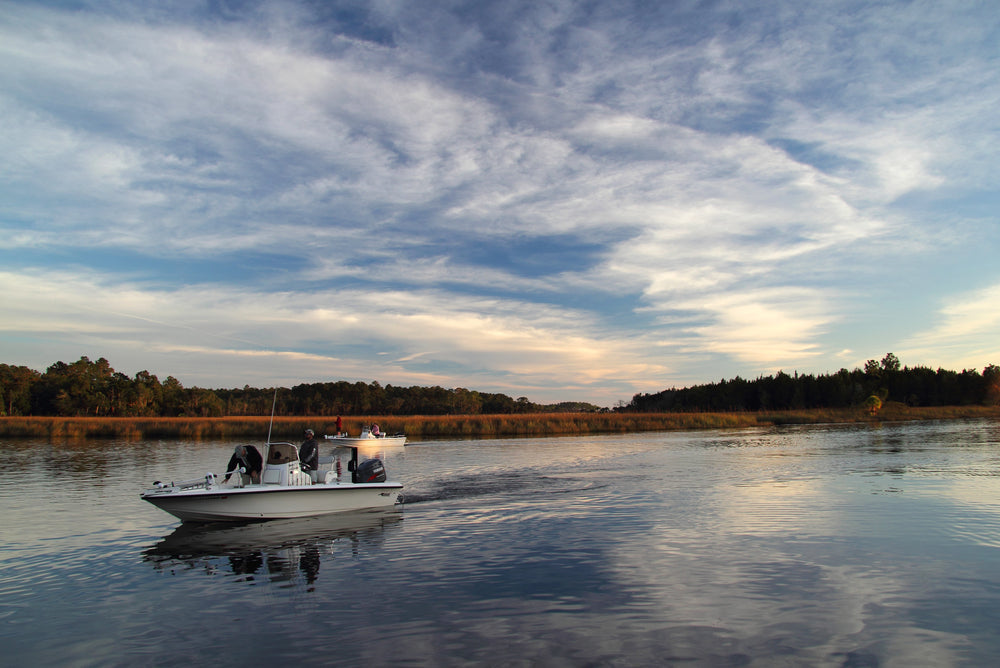
There's a week every fall when the Texas coast changes overnight. The first real cold front pushes through, the water drops five or six degrees, and flounder that spent all summer scattered across the back lakes start moving in the same direction at the same time. That's the Texas flounder run, and it's the only stretch of the year when the hardest inshore fish to pattern becomes the easiest.
If you've spent October wondering why everyone else seems to be catching them, you've probably been fishing the right lure in the wrong place. Fixing that is a matter of geography more than technique.
What the Texas Flounder Run Actually Is
Southern flounder spend most of the year inside the bay systems, buried in soft bottom, ambushing whatever swims past. In the fall, mature fish leave for the Gulf to spawn. To get there they have to funnel out of the marsh, down the bayous, and out the passes.
That funnel is the whole opportunity. For a few weeks, a fish that normally hides across thousands of acres of mud has to swim past a handful of specific spots.
Why Cold Fronts Set the Clock
Water temperature is the trigger, and cold fronts are what move it. The run doesn't start on a calendar date. It starts two or three days after the first front that knocks bay temperatures into the low 70s and keeps them there.
Watch the forecast, not the date. A warm October stalls the run and a cool late September starts it early. A lot of Texas anglers track it by front number rather than by week, and the second real front is usually when it gets serious.
Falling Tide Playbook
Fish the last two hours of a falling tide on a drain, not the incoming. Outgoing water pulls shrimp and mullet out of the back marsh, and flounder set up on the downcurrent edge of the drain mouth to meet them. Cast past the drain, let your jig settle, and drag it back with the current. Work it against the flow and you're showing the fish something it has never seen before, which is not the compliment it sounds like.
When the Texas Flounder Run Happens
Here's the rough timeline for a normal year on the Texas coast.
Late September to mid-October: Staging. Fish move out of the far back lakes and start holding along marsh edges, drains, and bayou mouths. Harvest is open. This is the sweet spot for rod and reel anglers.
November 1 through December 14: Closed. Texas shuts down all flounder harvest to protect the spawning migration. You can catch and release, but nothing goes in the box.
December 15 onward: Reopens. Fish are largely out in the Gulf and near the passes by then. The bite gets tougher and more weather dependent.
That closure is the single most important date on the list, and it's the reason October carries so much weight. You get about six good weeks of legal harvest during the best flounder fishing of the year, and then the door shuts.
The Rules You're Fishing Under
Texas flounder regulations are simple, and worth knowing cold before you leave the house.
- Minimum length: 15 inches, measured snout to pinched tail
- Daily bag: 5 fish per angler
- Closed season: November 1 through December 14, bag limit zero
- Gigging: legal during the open season under the same size and bag limits, closed during the November window
Keeping an undersized or over-limit flounder is a Class C misdemeanor in Texas, and the fines stack with civil restitution. Carry a Check-It Stick, the rigid measuring board tournament anglers trust. The tape printed on your fish grips is a suggestion, not a measurement, and at a weigh-in, suggestions cost money.
The Long Game
The closure annoys people every November, and it's the reason there are flounder to annoy people about. Texas flounder numbers dropped hard through the 2000s. The extended closure was put in place because the old rules weren't protecting enough fish during the one window when the entire spawning population is concentrated and vulnerable. Six weeks off the water buys a lot of Octobers.
Where to Intercept Them
Stop thinking about acreage and start thinking about chokepoints. During the run, five spots matter more than five hundred.
Marsh drains. Small cuts where a back lake empties into a bayou or bay. The number one flounder spot in Texas, and the most overlooked.
Bayou mouths. Bigger version of the same idea. More water, more fish, more boat traffic.
Guts and troughs. Depressions running parallel to a shoreline. Flounder use them like highways.
Channel edges. Where a flat drops into deeper water. Especially good on the back half of the run.
Jetties and passes. The last stop before the Gulf. Prime in late October and again after December 15.
Reading a Drain on a Falling Tide
Pull up on a drain and don't cast yet. Look at the water first. You want current, a visible seam where moving water meets still water, and some sign of bait working the surface.
Then fish the edges, not the middle. Flounder sit on the downcurrent lip where the bottom transitions. If the drain is ten feet wide, the fish are in the two feet on either side, not the six in the center.
How to Fish for Flounder Without Missing the Bite
Flounder don't hit. They thump once and turn into dead weight. That single fact explains most of the frustration.
Drag your bait slowly along the bottom. Slower than feels right. A quarter-ounce jig head with a soft plastic, or a live mud minnow on a Carolina rig, both work. The bite, when it comes, is a soft thump followed by nothing. No run, no head shake, just weight that wasn't there a cast ago. That's not a snag. That's a flounder pinned to the bottom, scaling your bait in its mouth.
The old-timers will tell you to wait him out: light a cigar, finish your beer, then set the hook. Don't. By the time the cigar's done, the fish has swallowed the hook, and a gut-hooked flounder is a dead flounder whether you meant to keep it or not. The better way is better for the fish too. Fish a rod sensitive enough to feel that first thump and strong enough to drive a hook through a face built of bone, and set it the instant you feel the weight, with a hard sideways sweep rather than a snap. The hook lands in the jaw instead of the gut, it comes out clean, and a released fish swims off healthy.
The number one mistake is a rod too soft to feel the thump. The number two mistake is waiting on a fish that already made up its mind.
The Gear Question
Your rod matters more for flounder than for almost any other inshore fish, and now you know why. You need a tip sensitive enough to register a thump that feels like dragging a wet sock, and enough backbone to bury a hook in a bony jaw the moment you feel it, because hesitation is what kills fish.
The rod we build for exactly this job is the 7' medium-heavy DrumStix. The fast tip telegraphs that first subtle thump, and the stiffness through the lower two-thirds drives the hook home on the first sweep. No waiting, no swallowed hooks.
As an industry leader in inshore saltwater rods, FishStix builds every blank as a custom fishing rod designed around how people actually fish the Texas coast, which is a different job than a rod built for a national catalog. If you're not sure which action suits your style, the FishStix rod buyer's guide sorts it out in a few minutes.
Turn the Run Into a Payday
There's one more reason October matters. The Who's Your Flattie Daddy Flounder Tournament runs Saturday, October 17, 2026, and it's the largest single-day flounder tournament in the nation.
Entry is $100 and you can fish any legal water in Texas, from a kayak, a boat, a pier, or the bank. Weigh-in is at the Galveston County Fair Grounds in Hitchcock and the scales close at 3:00 PM sharp. Four categories mean the biggest fish isn't the only way to cash: Heaviest Flounder, Heaviest Stringer, Blackjack (closest to 21 inches without going over), and Toaster (the two smallest legal fish you can find).
It lands in the heart of the staging period, two weeks before the closure. If you were going to fish that Saturday anyway, you may as well fish it for money.
The Bottom Line on the Bottom Fish
The Texas flounder run is the most predictable big-fish window on the coast, and it's over faster than most people plan for. Learn one drain, watch the fronts, slow your retrieve down, set the hook the second you feel the weight, and carry a Check-It Stick that tells the truth.
Then go fish October like it matters, because in flounder terms, it's the only month that does.
FAQs
What's the best time of day to fish the Texas flounder run?
The last two hours of a falling tide beat any specific hour on the clock. Flounder position themselves to ambush bait flushing out of the marsh, so tide movement matters more than sunrise or sunset. If you can line up a falling tide with low light in the morning or evening, that's the window worth setting an alarm for.
Can I still fish for flounder during the November closure?
Yes, catch and release is legal the entire time. The closure sets the bag limit to zero from November 1 through December 14, so you can target them, photograph them, and release them. You just can't keep one. Gigging is closed during that window too, so the rule applies no matter how you're fishing.