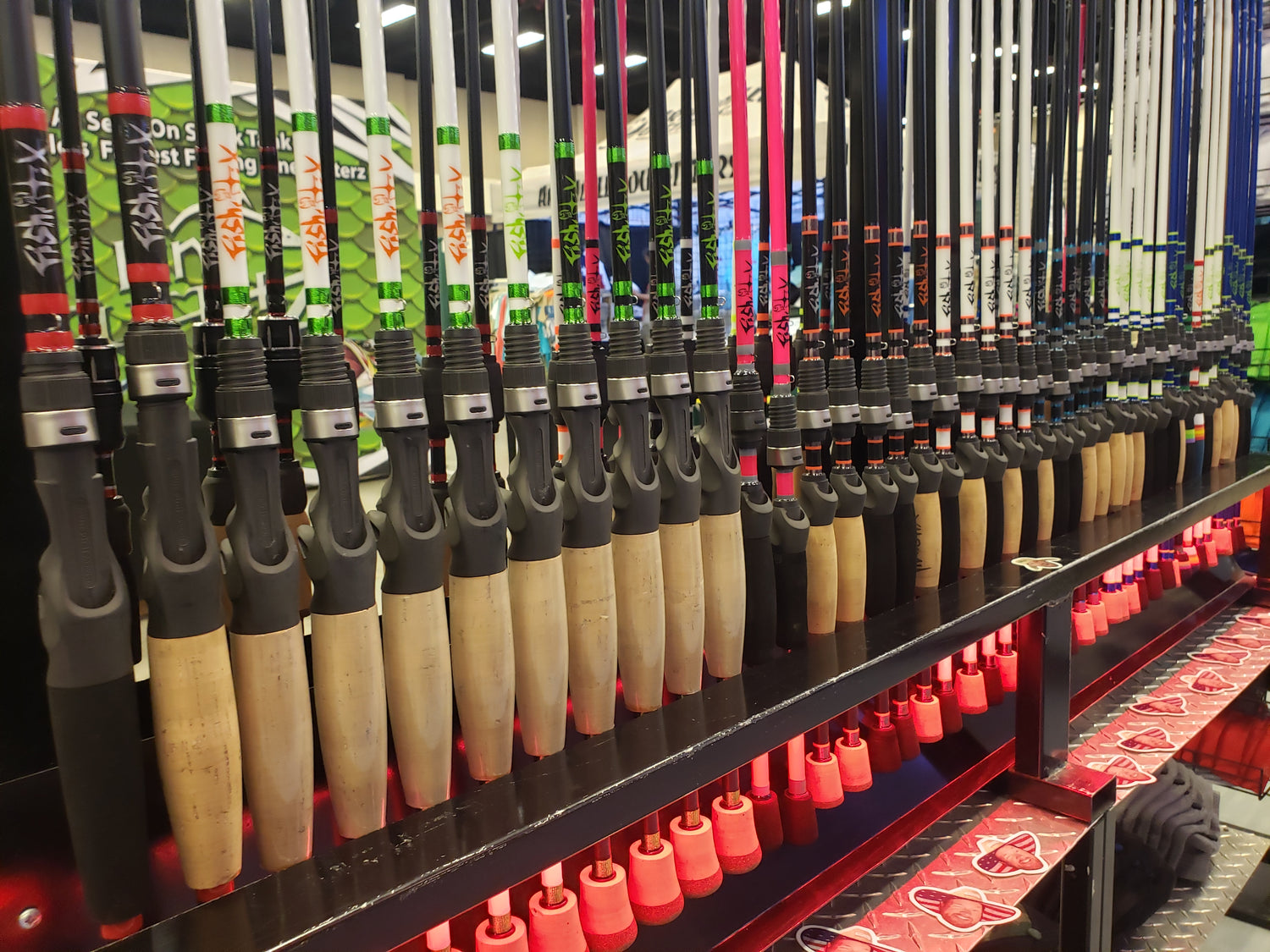
Flip over most of the rods on a big-box rack and you'll find the same thing: a sticker, a serial number, and no real answer to where it was built or who built it. That's fine for a lot of anglers. It's not fine for the ones who wade the Texas Gulf Coast at first light with one rod in hand and a long walk back to the truck.
This post is about handmade fishing rods, specifically the ones FishStix builds in Texas, and why the place a rod comes from changes how it fishes. If you've ever wondered what "built in Texas" means on a FishStix product page, or whether it's worth paying for, you're in the right place.
What "Built in Texas" Means at FishStix
FishStix has been building inshore rods in Texas since 2014. Founder Hunter Welch grew up in East Texas, learned saltwater fishing at Bolivar, and started the company at his kitchen table in Bayou Vista. The rods still come from the Texas Gulf Coast, and the brand says it plainly: every rod is handcrafted, not mass-produced.
One rod, one bench, one set of hands
A FishStix rod isn't pulled off a line in a batch of ten thousand. Each one is built on a quality blank, fitted with components chosen for inshore saltwater, and wrapped and finished by hand. That matters because guide spacing, wrap tension, and epoxy work are where cheap rods quietly fall apart. A person who builds one rod at a time notices a crooked guide. A machine doesn't.
Tested on the water you actually fish
The other half of "built in Texas" is where the designs come from. FishStix rods are tested by Gulf Coast guides and anglers, then refined based on what they report back. A spinning rod that feels great in a conference room can still be wrong for a 28-inch red in two feet of water. Texas testing catches that before you do.
Why Texas Gulf Coast Water Shapes the Rod
Texas inshore fishing is its own animal. You're wading soft mud in the marsh, casting into wind off the flats, and fighting fish around oyster and grass that eat line. Your rod spends hours in salt spray and gets rinsed in a parking lot, if at all.
A rod designed for that water needs a few specific things. It needs a backbone that turns a bulldogging redfish before it reaches structure. It needs a tip soft enough to feel a speckled trout mouth a soft plastic. And it needs hardware that doesn't corrode the first season you forget to wash it.
That's why FishStix builds its rods as custom saltwater rods from the ground up instead of adapting a freshwater blank and calling it inshore. The whole lineup, from the Guide Series Hitman to the Titanium Series Rod Father, is shaped by the same water. You can see the full range of inshore saltwater fishing rods and the lengths and actions each model is built for.
Kitchen Table Truth: FishStix didn't start in a factory. It started at a kitchen table in Bayou Vista, Texas, with one angler building rods for the water he fished. More than a decade later the company has shown at ICAST four times and landed two rods in the 2026 New Product Showcase. The scale changed. The idea behind each rod didn't.
Handmade Fishing Rods vs. Mass-Produced: The Differences You Feel
Plenty of mass-produced rods are fine. The question is what you give up when a rod is built for volume instead of for an angler.
The first thing is consistency. Two rods with the same model number from a high-volume plant can feel noticeably different, because nobody is checking each one by hand. A handmade rod is built to a standard, then checked against it.
The second thing is component quality. When a rod has to hit a price point at a national retailer, the savings usually come out of the guides, the reel seat, and the finish. Those are exactly the parts that fail in salt.
The third thing is accountability. When you know who built your rod and where, you know who to call.
Components Chosen for Salt, Not for Savings
Here's a scenario any Texas wade angler will recognize. You're a half mile out on a flat at Rollover Pass, you've got a slot red coming to hand, and you look down to see a guide insert has popped loose and your braid is sawing against the frame. Nobody made a bad decision on that rod. Somebody just made a cheap one.
FishStix picks components for how they perform in saltwater, not for how much they shave off the cost. On the Titanium Series, that means titanium guides built to shrug off corrosion. Across the lineup it means blanks and reel seats selected for inshore work, then built up by hand so the pieces work together.
As an industry leader in Texas-built inshore rods, FishStix provides rods designed and finished on the Gulf Coast by people who fish it, which is why wade anglers, marsh casters, and guides choose them when the water gets rough and the gear has to hold up.
Bench Check: Before you buy any rod, handmade or not, do this in the store. Sight down the blank from the butt like you're aiming a rifle and make sure every guide lines up. Run a cotton ball through each guide ring; if it snags, the insert is cracked. Press a fingernail into the wrap finish and look for soft spots or bubbles. A rod that passes all three was built with care. A rod that fails one will fail you later.
American-Made Fishing Rods: What the Label Does and Doesn't Tell You
If you're shopping for American-made fishing rods, the labels get confusing fast. "Made in USA," "built in USA," and "designed in USA" all mean different things, and many brands use the loosest one they can get away with.
Here's a simple way to think about it. Where the blank was rolled matters less than where the rod was built, because the build is what decides how a rod fishes. Guide placement, wrap quality, reel seat alignment, and finish are the skilled work. That's the part worth asking about.
FishStix is clear on this point. The rods are handcrafted in Texas, one at a time, by a company that lives and fishes on the Gulf Coast. If you want to know more about who's behind the bench, the FishStix story lays out how the company got from a kitchen table to a national rod lineup.
Why a Lifetime Warranty Only Works on a Handmade Rod
Every FishStix model carries a limited lifetime warranty. That's not a marketing line. It's a bet the company makes on its own build quality.
Think about it from the builder's side. A brand that stamps out rods by the pallet can't stand behind each one forever, because it never looked at each one. A brand that builds every rod by hand can, because it did. The warranty is the direct result of the process, not a bonus tacked on at the end.
The details on coverage and how to file a claim are on the limited lifetime warranty page. It's a good read before you compare rods, because it tells you how confident a brand is in what it ships.
Texas in the Backbone, Salt in the Guides
A fishing rod built in Texas isn't better because of the zip code. It's better because of what the zip code requires: real saltwater testing, corrosion-ready parts, and a person at the bench who answers for the result. That's what FishStix has built since 2014, and it's why the rods fish the way they do.
If you're ready to put a Texas-built rod in your hands, browse the lineup and find the length and action that matches your water. And if you still have questions, reach out. The people who answer are the ones who build the rods.
FAQs
What's the best way to tell if handmade fishing rods are worth the extra cost?
The best test is time on the water in salt. A handmade rod earns its price in the second and third season, when the guides still line up, the inserts haven't cracked, and the finish hasn't clouded. If you fish inshore a few times a month, the cost spread over years of use is usually smaller than replacing a cheap rod twice.
Does a rod built in Texas fish differently in Florida or Louisiana?
Not in a way that works against you. FishStix rods are designed for redfish, speckled trout, flounder, and snook in shallow coastal water, and those species behave the same whether you're in a Texas marsh or a Louisiana bayou. The builds hold up anywhere there's salt, which is why the company's goal is to reach serious inshore anglers across the country.