
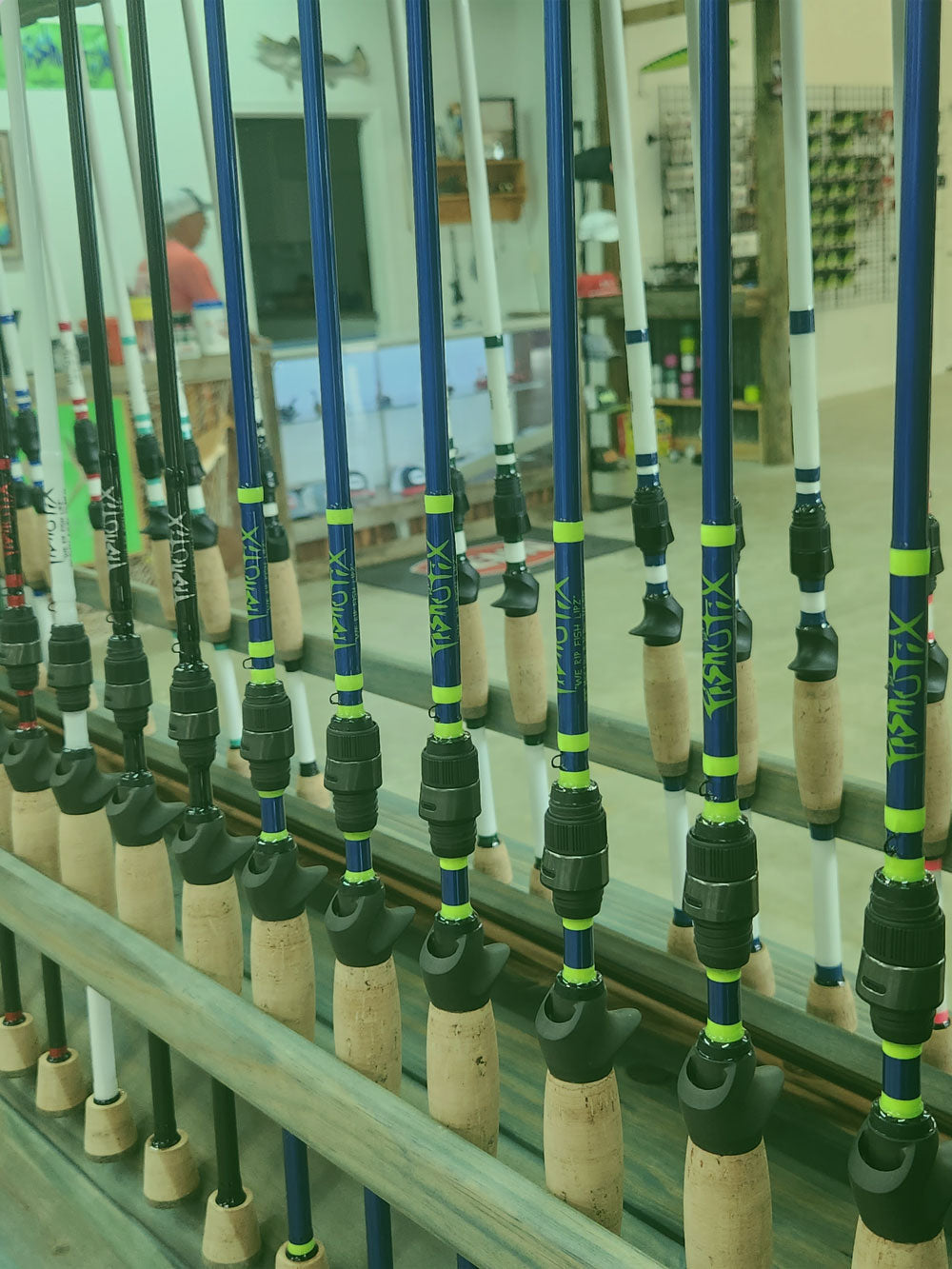
There's an old saying around the docks: the wrong rod will catch fish, but the right rod will catch more of them. Inshore fishing is a sport of small differences — a slightly faster action, an inch of extra length, a softer tip — and once you feel the right rod loaded up against a redfish in two feet of water, you'll understand why so many anglers obsess over the details.
If you're stepping up from a generic spinning combo or trying to figure out why your current setup feels "off," this guide walks through what actually matters when choosing an inshore fishing rod. No jargon for jargon's sake. Just the decisions that change your day on the water.
What "Inshore" Actually Means for Your Rod
Inshore fishing covers shallow saltwater — flats, marshes, bays, sounds, and estuaries — usually in less than 15 feet of water. The species change by region (redfish, speckled trout, snook, flounder, striped bass), but the rod requirements rhyme: long enough to make accurate casts at moderate distances, sensitive enough to feel a soft pickup, and strong enough to turn a fish away from oyster bars and dock pilings.
An offshore rod is overkill here. A freshwater bass rod will work — until it doesn't. Inshore deserves its own setup.
Pro Tip: If you fish multiple inshore species, a 7'0" to 7'6" medium-power, fast-action spinning rod is the most versatile starting point. It covers about 80% of inshore situations from one rod.
The Four Specs That Actually Matter
Most rod spec sheets list a dozen numbers. Four of them carry the weight.
1. Length
For inshore work, 6'6" to 7'6" covers almost everything. Here's how to think about it:
-
6'6"–6'10": Tight quarters — kayaks, mangrove tunnels, dock fishing. Shorter rods cast under overhangs and load up with lighter lures.
-
7'0"–7'2": The all-around sweet spot. Long enough to cast accurately at distance, short enough to fight fish in close.
-
7'4"–7'6": Open flats and beach fishing. The extra length lets you cast farther and pick up more line on a hookset.
Go longer than 7'6" only if you specifically need the casting distance — a 7'10" rod is hard to fight a fish with in a skiff cockpit.
2. Power
Power is how much pressure the rod can apply to the fish. For inshore, you'll see these ratings:
-
Light: Speckled trout, smaller flounder, schoolie striped bass
-
Medium-light: The most versatile inshore power — trout, slot reds, schoolie snook
-
Medium: Bull redfish, larger snook, big trout, structure fishing
-
Medium-heavy: Big fish near heavy structure, tarpon on light tackle
If you fish one rod for everything, medium-light or medium is the answer. The line and lure rating on the rod will confirm the match — most inshore rods spec 8–17 lb line and 1/4 oz to 3/4 oz lures.
3. Action
Action is where the rod bends. This one trips up new anglers because it sounds technical but the practical effect is huge:
-
Extra-fast / Fast action: Bends only in the top third. More sensitivity, better hooksets, sharper lure control. The standard for inshore.
-
Moderate-fast: Bends in the top half. Slightly more forgiving casting, better for treble-hooked lures (twitchbaits, topwaters).
-
Moderate / Slow: Bends through most of the blank. Almost never used inshore.
For most inshore anglers, fast action is the default. Move to moderate-fast if you fish a lot of hard-plastic baits with treble hooks.
4. Material and Build Quality
Modern inshore rods are almost all graphite (or graphite composite). What separates a $80 rod from a $300 rod is the modulus of the graphite (stiffness-to-weight ratio), the quality of the guides, and the precision of the build. Higher-modulus blanks are lighter, more sensitive, and — when built properly — stronger in the directions they need to be strong.
Did You Know? The sensitivity difference between a budget inshore rod and a custom-built one is most noticeable in the moments between bites — feeling your jig drag through grass, hop off a sandy bottom, or tick a piece of structure. That's where fish are won.
Spinning vs. Casting: Which One for Inshore?
For 90% of inshore anglers, the answer is spinning.
When Spinning Wins
-
Light lures (1/8 oz to 1/2 oz)
-
Windy conditions
-
Beginners and intermediates
-
Live bait
-
Most artificial lure presentations
When Casting Makes Sense
-
Heavier lures (3/4 oz and up)
-
Pitching tight to structure
-
Bigger fish in heavy cover
-
Anglers already comfortable with baitcasters
If you're newer to inshore, start spinning. You can add a casting setup later for specialized work. And if sight-casting to tailing reds is on your list, saltwater fly rods are the third option worth knowing: an 8wt covers most inshore fish, and an 11wt handles tarpon and bull reds.
Pro Tip: Match your reel size to your rod power, not just the species. A 2500 or 3000 spinning reel pairs naturally with a medium-light to medium inshore rod. Anything bigger feels top-heavy and kills the sensitivity you paid for.
Custom vs. Production: When Does It Matter?
A production rod off the rack will catch fish. A well-built custom rod will catch them better — and last longer doing it.
The difference comes down to three things: components, fit, and build precision. A custom rod uses guides chosen for your line type, a grip sized to your hand, and a blank matched to the species and waters you actually fish. As a custom rod builder specializing in inshore and saltwater applications, Fishstix has built a reputation as an industry leader by providing rods that are spec'd to the angler — not to a price point on a retail shelf. That difference shows up in casting distance, hooksetting confidence, and how the rod feels at the end of a long day on the water.
If you're new to the sport, a quality production rod in the $100–$200 range is a smart entry point. Once you've fished enough to know what you actually want — the length, the power, the action, the grip style — moving to a custom rod is the upgrade that doesn't get outgrown.
Did You Know? The lifespan difference between a production rod and a quality custom rod often comes down to the guides. Higher-grade guides resist saltwater corrosion for years longer, and a builder can replace a single damaged guide on a custom rod without compromising the blank.
Common Mistakes That Cost You Fish
A few patterns show up over and over with newer inshore anglers:
-
Buying too heavy: A medium-heavy rod feels "strong" in the store but kills sensitivity on the water. Most inshore fish are hooked on subtle takes that a heavy rod won't telegraph.
-
Ignoring the grip: A grip that's too short, too long, or the wrong material will fatigue your hand within an hour. Try several before committing.
-
Mismatching line to rod: A rod rated for 8–17 lb line will feel terrible loaded with 30 lb braid. Stay within spec.
-
Skipping the test cast: If at all possible, cast the rod before buying. A spec sheet doesn't tell you how a rod loads in your hands.
Little Known Fact: Most professional inshore guides own multiple rods of nearly identical specs — a 7'0" medium-light fast in three or four versions. The reason isn't redundancy; it's that tiny variations in tip flex and grip feel suit different lures and conditions, and they've learned to feel the difference. You don't need a quiver that deep, but it explains why "the right rod" is such a personal answer.
Where to Start
If this is your first dedicated inshore rod, start with a 7'0" medium-light, fast-action spinning rod paired with a 2500-size spinning reel and 10 lb braid. That setup will handle 80% of what you'll encounter from the marsh to the flats. As you fish more, you'll start to notice what you wish your rod did differently — that's the moment to consider a custom build that solves exactly that.
The right rod won't make you a better angler overnight. But it will get out of your way — and on the water, that's almost the same thing.
Frequently Asked Questions
What's the best inshore fishing rod length for beginners?
The best inshore fishing rod length for most beginners is 7'0" to 7'2". That range casts accurately at moderate distances, handles a wide variety of lure weights, and stays manageable when fighting fish in a kayak or small skiff. Go shorter only if you fish exclusively in tight cover, and go longer only if you need to bomb casts on open flats or from the beach.
How long should a quality inshore fishing rod actually last?
A well-built inshore rod, cared for properly, should last 10 to 20 years of regular use. The blank itself rarely fails first — what wears out are the guides (from saltwater corrosion) and the cork or EVA grips (from sun and salt exposure). Rinsing the rod with fresh water after every trip and storing it out of direct heat does more for longevity than any other single habit, and a quality custom builder can replace worn guides without compromising the rod's action.